In the fields of electronics manufacturing, electrical assembly, and precision industry, electrostatic discharge (ESD) is one of the key factors affecting product reliability and production safety. To effectively control electrostatic risks, ESD bakelite sheets (also known as antistatic bakelite sheets) are widely used in various industrial environments, becoming a commonly used material that combines insulation, mechanical strength, and antistatic properties.
This article will systematically introduce the application value of ESD bakelite boards from the aspects of material properties, antistatic principles, and typical industrial applications.
ESD bakelite boards are based on traditional bakelite boards (phenolic resin laminates), and through surface treatment or material modification, they acquire stable antistatic properties.
Maintaining the original mechanical strength and processing performance of the bakelite board
Slowly releasing static electricity within a specific resistance range, avoiding charge accumulation
Simultaneously meeting the dual requirements of insulation and antistatic properties
Therefore, ESD bakelite boards are often used in applications that require both structural strength and sensitivity to static electricity.
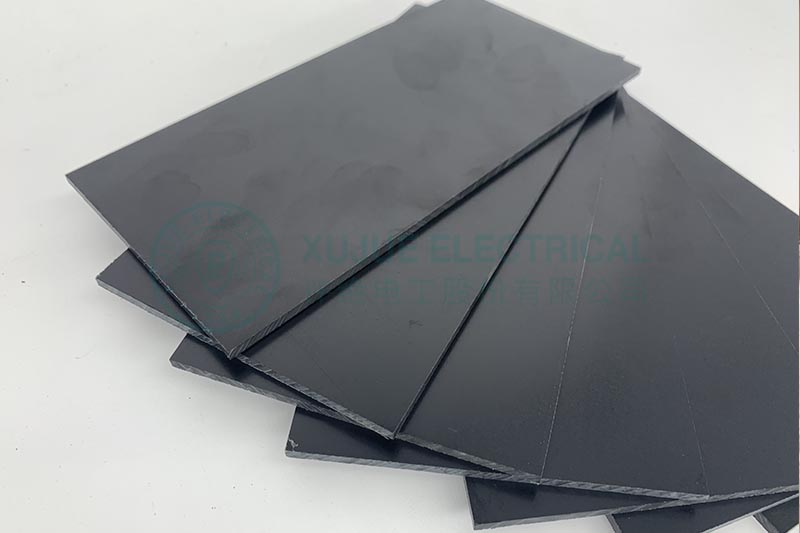
Antistatic Working Principle: ESD bakelite sheets control the resistivity of the material’s surface or overall structure, allowing static charge to dissipate in a controlled manner, preventing damage to electronic components from instantaneous discharge.
Resistivity Range:
The surface resistivity of high-quality ESD bakelite sheets is typically controlled between 10⁶ and 10⁹ Ω/sq. This range ensures rapid static discharge while preventing leakage due to excessively low resistance, ensuring operational safety.
Static Discharge Capacity:
Static charge generated during friction or contact separation can be guided to a grounding device through the material surface. Compared to ordinary plastics (with resistivity typically above 10¹² Ω), ESD bakelite sheets effectively prevent static accumulation.
Durability of Antistatic Effect:
Traditional antistatic materials often rely on surface coatings or additives, whose performance degrades after prolonged use or cleaning. ESD bakelite sheets, through the addition of internal conductive materials, maintain stable antistatic performance throughout their overall service life and possess good abrasion and cleaning resistance.
Environmental adaptability:
In dry environments or low-humidity cleanrooms, ordinary materials are prone to static electricity. ESD bakelite boards are less dependent on humidity and can maintain stable static dissipation capabilities even under low-humidity conditions.
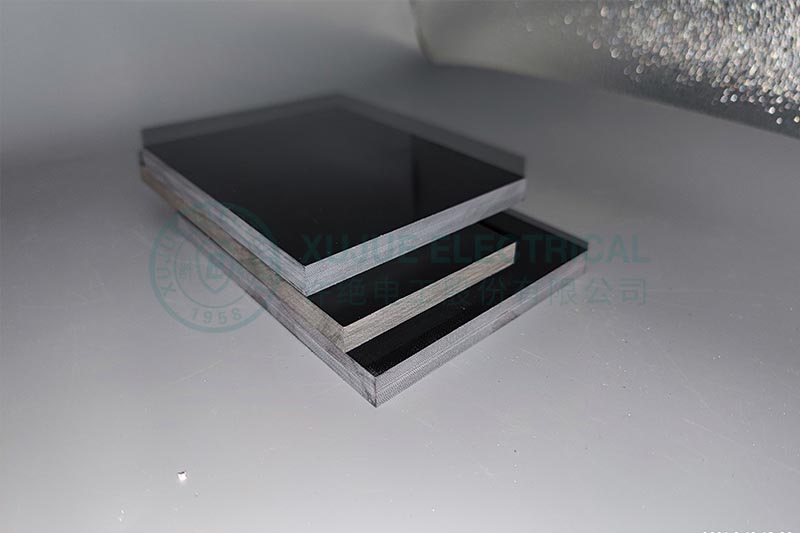
SMT production line tooling fixtures, PCB test jigs and positioning plates, anti-static workbench surfaces.
Low-voltage electrical insulation supports, internal partitions of switch cabinets, various anti-static insulating components.
Automation line support structures, anti-static clamps and trays, internal structural components of precision equipment.
Support platforms for electrostatic sensitive components, auxiliary structural components in testing and assembly processes.
When choosing ESD bakelite sheets, consider the following:
Certification Standards: Confirm that the product complies with relevant anti-static standards such as ANSI/ESD S20.20 or IEC 61340-5-1.
Color Marking: ESD bakelite sheets are usually black (due to the addition of carbon powder or carbon fiber), making it easy to distinguish anti-static materials from ordinary materials in the warehouse.
Thickness and Dimensions: Select the appropriate thickness based on the load-bearing and temperature resistance requirements of the fixture (common thicknesses range from 3mm to 50mm).
With its stable antistatic properties, reliable mechanical strength, and good processing adaptability, ESD bakelite sheets have become one of the most widely used materials in the electronics manufacturing, electrical equipment, and automation industries.
If you are looking for ESD bakelite sheets with stable antistatic properties, please contact us.
If you need our products please write down any questions, we will reply as soon as possible.
There are three ISO certificates for quality certification. The certificates will be shown later. ISO
After receiving the advance payment, the production cycle is 15-25 days. And the transportation cycle should be calcul……
We supply with installation guide and user manual for each transformer. If you do not understand them. We will offer v……
