In the fields of electrical insulation and mechanical manufacturing, G11 epoxy laminates (EPGC203 sheets) are widely used due to their excellent mechanical strength and heat resistance. This material is composed of glass fiber and epoxy resin, making it more abrasive and brittle compared to conventional plastics.
Without proper cutting and machining methods, issues such as delamination, cracking, and excessive dimensional deviation can easily occur during processing. This article outlines professional machining practices for EPGC203 epoxy sheets and explains how to achieve high-precision tolerance control.
High hardness and strength: Causes rapid tool wear during machining.
Glass fiber reinforced structure: Edges are prone to burrs and delamination.
Heat-resistant but poor thermal conductivity: Heat tends to accumulate in the cutting area, leading to localized overheating.
Relatively brittle material: Improper processing may result in edge chipping or cracks.
Therefore, selecting appropriate equipment and machining parameters is essential.
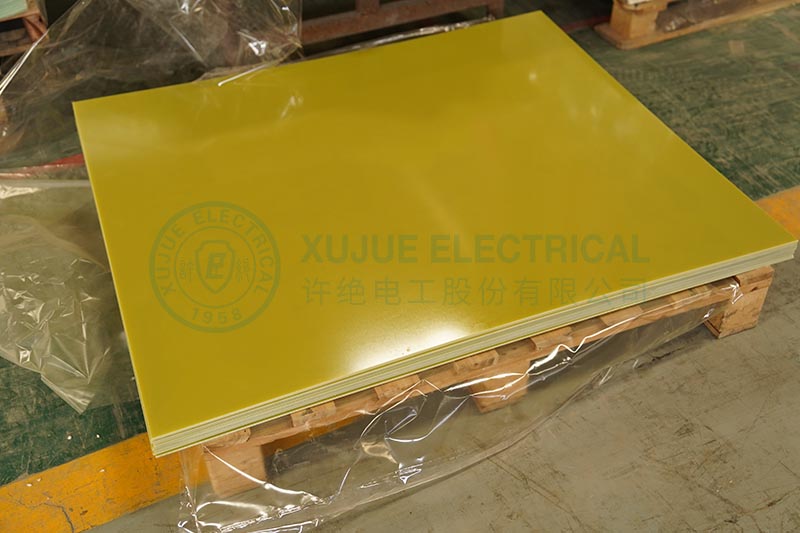
Cutting is the first step in processing, and the chosen method directly affects edge quality and subsequent machining accuracy.
For straight cuts, sawing is one of the most commonly used methods.
Recommended equipment: Band saw, circular saw
Tool selection: Use carbide (tungsten steel) blades. Glass fiber quickly wears out high-speed steel tools, while carbide maintains smoother cuts and longer tool life.
Feed rate: Moderate feed speed is recommended. Excessive speed may cause thermal softening or edge chipping.
For applications requiring no heat-affected zone and smooth edges, waterjet cutting is an ideal choice for EPGC203 epoxy sheets.
Advantages: No heat generation during cutting, effectively preventing delamination and dust issues
Precision: With accurate programming, high contour accuracy can be achieved, reducing the need for secondary finishing
Laser cutting offers high efficiency, but it involves certain risks when applied to G11 materials.
Risk factors: Epoxy resin tends to carbonize at high temperatures, which may cause blackened edges and even introduce slight electrical conductivity.
Impact: This can negatively affect insulation performance in electrical applications.
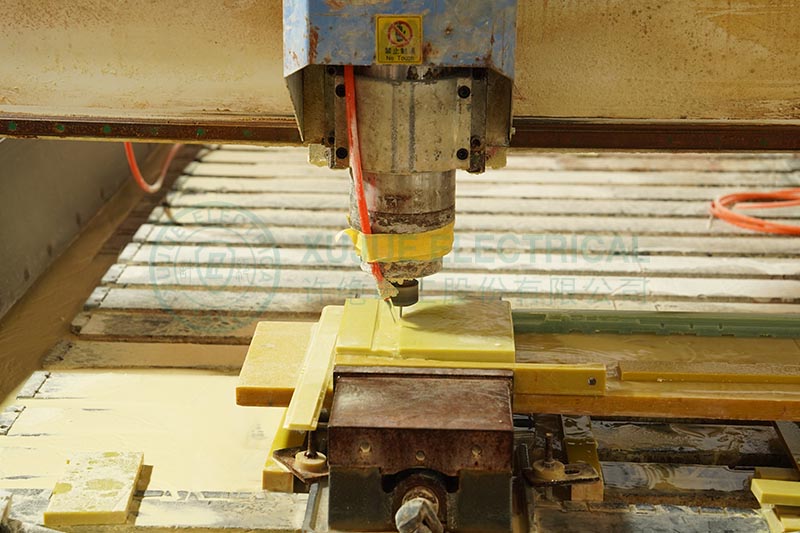
Prioritize the use of carbide tools.
For high-precision machining, consider using diamond-coated (PCD) tools.
Maintaining sharp cutting tools helps minimize delamination and burring.
Employ a lower feed rate and a higher spindle speed to reduce the risk of delamination.
Carefully control the depth of cut per pass to avoid excessive cutting depths in a single pass.
Utilizing a multi-pass, layered cutting strategy helps improve surface finish quality.
It is recommended to use air cooling or Minimum Quantity Lubrication (MQL) to assist the machining process.
Machining generates fiberglass dust, which is hazardous to human health. Therefore, industrial dust extraction equipment must be installed.
Use specialized fixtures to securely clamp the material.
Apply a protective film to the material surface prior to machining.
Reduce the feed rate appropriately as the cutting tool is about to exit the workpiece.
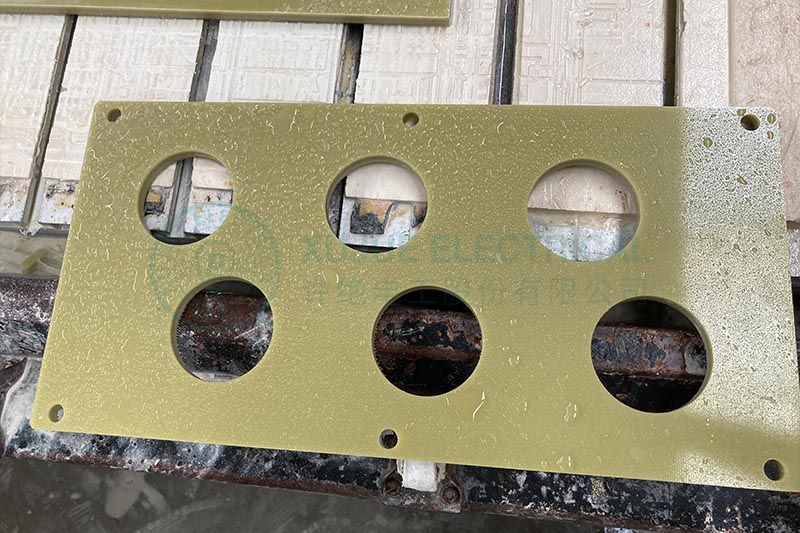
In the precision machining of EPGC203 epoxy laminates, effective tolerance control is a key indicator of processing quality.
Epoxy laminates have a certain level of moisture absorption, and their thermal expansion behavior differs from metals.
Temperature and humidity stabilization:
Before precision machining, the sheets should be stored in the workshop for at least 24 hours. This allows internal stresses to be released and ensures the material adapts to the ambient temperature and humidity.
Flat reference surface alignment:
During clamping, ensure the sheet is fully in contact with the worktable. This prevents deformation during fixturing, which could otherwise lead to dimensional rebound and out-of-tolerance issues after machining.
Based on professional machining experience, the typical achievable tolerances for G11/EPGC203 are as follows:
Thickness tolerance:
Mainly depends on raw material quality. Precision-grade sheets are typically within ±0.05 mm to ±0.10 mm.
CNC contour tolerance:
Under precision milling conditions, profile dimensions can generally be controlled within ±0.10 mm.
Hole position tolerance:
With CNC drilling, center distance accuracy can reach ±0.05 mm.
Hole diameter tolerance:
Typically follows H9 or H11 tolerance standards.
For example, for a 5 mm diameter hole, the tolerance can be controlled within +0.03 mm to +0.08 mm.
After cutting and drilling, fine glass fiber burrs may remain on the edges.
Manual finishing:
Use fine sandpaper or a file to apply light chamfering.
Precautions:
Avoid excessive force during operation to prevent delamination of the fiberglass layers. Proper chamfering not only improves appearance but also helps reduce stress concentration and prevents cracking during assembly.
Cause: Dull cutting tools or excessive feed rate
Solution: Replace with sharp tools in time and reduce the feed speed
Cause: Heat accumulation during machining causes thermal expansion, followed by shrinkage after cooling
Solution: Improve cooling conditions, use smaller cutting depths, and apply higher spindle speeds
Cause: Resin is impacted or overheated during machining, exposing glass fibers
Solution: Check drill bit sharpness and ensure proper chip evacuation
The cutting and machining of G11/EPGC203 epoxy laminates require proper equipment, optimized process parameters, and skilled operation. By selecting suitable machining methods, refining processing parameters, and maintaining strict tolerance control, both product quality and reliability can be significantly improved.
If you need customized machining solutions or a quotation, feel free to contact us anytime.
If you need our products please write down any questions, we will reply as soon as possible.
There are three ISO certificates for quality certification. The certificates will be shown later. ISO
After receiving the advance payment, the production cycle is 15-25 days. And the transportation cycle should be calcul……
We supply with installation guide and user manual for each transformer. If you do not understand them. We will offer v……
