Filament wound fiberglass tubes are widely used in electrical insulation, chemical equipment, new energy, and machinery manufacturing due to their excellent mechanical properties and reliability.
In actual procurement, many customers find that the prices of filament wound fiberglass tubes of the same specifications produced by different manufacturers often vary significantly. So, what factors cause these price fluctuations?
Filament wound fiberglass tubes are typically produced using high-strength continuous fiberglass yarn. This type of material is superior to chopped fiberglass or low-grade fiberglass in terms of tensile strength, stability, and consistency, and its raw material cost is relatively higher.
Depending on the application scenario, different types of resins are selected for filament wound fiberglass tubes, mainly including:
Electrical grade epoxy resin
Structural grade epoxy resin
High-temperature and corrosion-resistant special resins
Higher resin grades and more stable performance result in higher material costs, ultimately affecting product pricing.
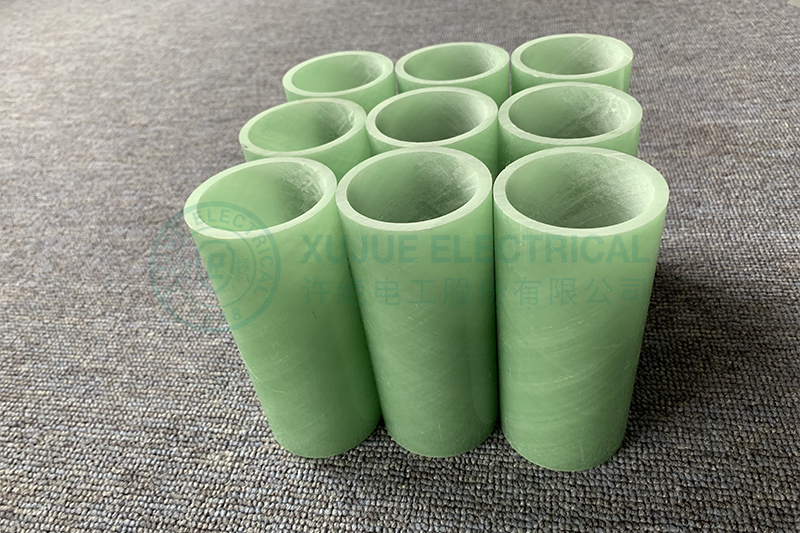
The production of filament wound fiberglass tubes primarily utilizes computer-controlled winding processes. Key influencing factors include:
Winding Accuracy: High-precision equipment ensures consistency in fiber winding angle and tension, thereby improving the tube’s pressure resistance. This type of equipment involves higher technological investment and depreciation costs.
Curing Method: High-temperature curing is more efficient than room-temperature curing, but energy costs also increase accordingly.
Inner Liner Treatment: When using surface felt or mesh fabric for the inner lining, its thickness and resin content directly affect the corrosion resistance. Higher lining process requirements lead to increased material and processing costs.
Size Parameters: Large-diameter, thick-walled filament wound fiberglass tubes require more material and are more difficult to form.
Products with tight tolerances and high precision requirements require additional processing and inspection steps.
Non-standard Customization: Customizing lengths, special tolerances, or end structures extends the production cycle, adds processes, and may increase the product scrap rate. These products are typically more expensive than standard-specification products.
High-quality filament wound fiberglass tube typically undergoes multiple tests, including:
Dimensional and tolerance testing
Tensile, bending, and compression mechanical property testing
Electrical property testing (dielectric strength, voltage withstand capability, etc.)
Current curing degree and internal structure inspection
The more tests and the stricter the standards, the higher the quality control costs. This cost is reflected in the product price.
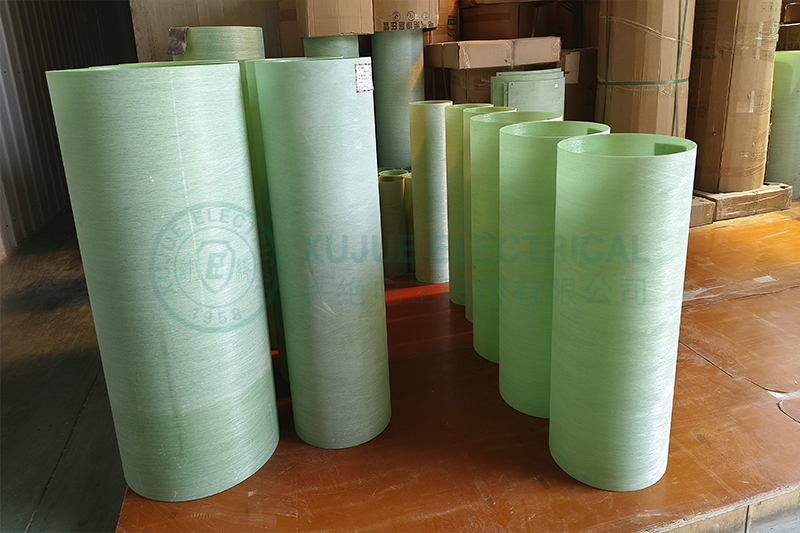
Filament wound fiberglass tube is lightweight but bulky, making transportation distance a significant consideration. Long-distance transport requires additional vehicles to meet extra length or height standards, increasing transportation costs.
Bulk purchases usually yield more favorable unit prices.
Manufacturers with ISO certification, special equipment manufacturing licenses, etc., invest more in raw material selection and quality control, resulting in relatively higher product prices, but also more guaranteed quality.
Q: Why are there significant price differences for filament wound fiberglass tube of the same specifications?
A: The main differences lie in the grade of raw materials, the design of the winding structure, testing standards, and the degree of customization.
Q: Is filament wound fiberglass tube always more expensive than ordinary fiberglass tubing?
A: Generally, it is more expensive, but in applications requiring high strength or insulation, its overall cost may be lower.
Q: Does a higher price mean a better product?
A: Not necessarily. The suitability of a product needs to be determined based on specific working conditions and technical requirements.
The price of filament wound fiberglass tube is determined by a combination of factors, including raw materials, manufacturing process, structural design, size specifications, quality control, and application requirements.
When comparing prices, buyers should focus on the following:
Clarify usage conditions: Confirm key parameters such as pressure, temperature, medium, and burial depth.
Request material configuration information: Understand indicators such as resin type and fiberglass content.
Examine manufacturer qualifications: Pay attention to production experience and the completeness of the quality management system.
|We recommend providing detailed usage conditions and performance requirements when making a purchase so that suppliers can provide more accurate selection solutions and quotations. For specific purchasing needs, please contact our technical team for one-on-one consultation and quotation services.
If you need our products please write down any questions, we will reply as soon as possible.
There are three ISO certificates for quality certification. The certificates will be shown later. ISO
After receiving the advance payment, the production cycle is 15-25 days. And the transportation cycle should be calcul……
We supply with installation guide and user manual for each transformer. If you do not understand them. We will offer v……
