Heat-resistant crepe paper possesses heat resistance, flexibility, and oil immersion compatibility. It is widely used in critical components such as inter-layer and inter-turn insulation of windings and lead wire wrapping in the manufacture of various electrical equipment, including transformers and motors. The selection of heat-resistant crepe paper directly affects the insulation safety of equipment, influencing the overall operational reliability and service life. This article outlines key selection points from the perspectives of application scenarios, heat resistance ratings, and performance parameters, providing a reference for engineering design and procurement decisions.
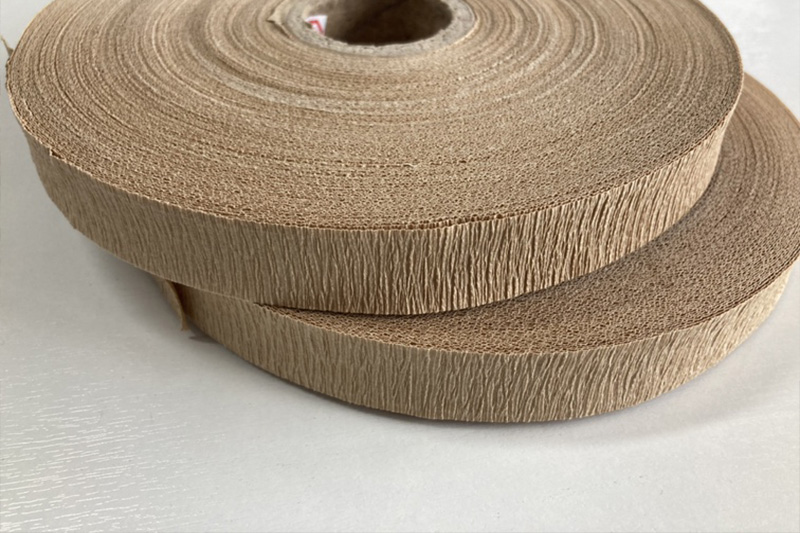
Heat-resistant crepe paper is a flexible insulating material made from high-purity electrical insulating paper as the base material, which undergoes wrinkling treatment and modification with heat-resistant resin or high-temperature processes. Its surface exhibits a regular wrinkled structure, and its main characteristics are as follows:
♦ Acceptable electrical insulation performance
♦ Good heat resistance and stability
♦ Balanced flexibility and mechanical strength
♦ Resistant to grease and chemical corrosion
First, the heat resistance rating (thermal stability rating) of the material should be clearly defined when selecting a transformer. Different ratings are suitable for different scenarios:
Class B (130℃): Suitable for conventional distribution transformers, balancing cost and usage requirements.
Class F (155℃): Suitable for electrical equipment with high load rates or operating environments with high temperatures.
Class H and above (180℃ and higher): Suitable for high-temperature conditions, new energy fields, and special transformers.
The higher the heat resistance rating, the longer the insulation life of the material at high temperatures, but the cost also increases accordingly. The heat resistance rating should be selected based on the actual operating conditions.
After determining the heat resistance rating, the following parameters need to be further checked:
Common specifications: 0.13mm–0.80mm
The greater the thickness, the higher the mechanical strength, but the lower the flexibility.
Dielectric strength directly affects the insulation safety of the transformer. It must meet the transformer voltage level and corresponding standards.
Mechanical properties include tensile strength, tear strength, etc. It is especially important during winding fastening and thermal expansion and contraction.
Heat-resistant crepe paper used in oil-immersed equipment must not deteriorate in performance after long-term oil immersion.
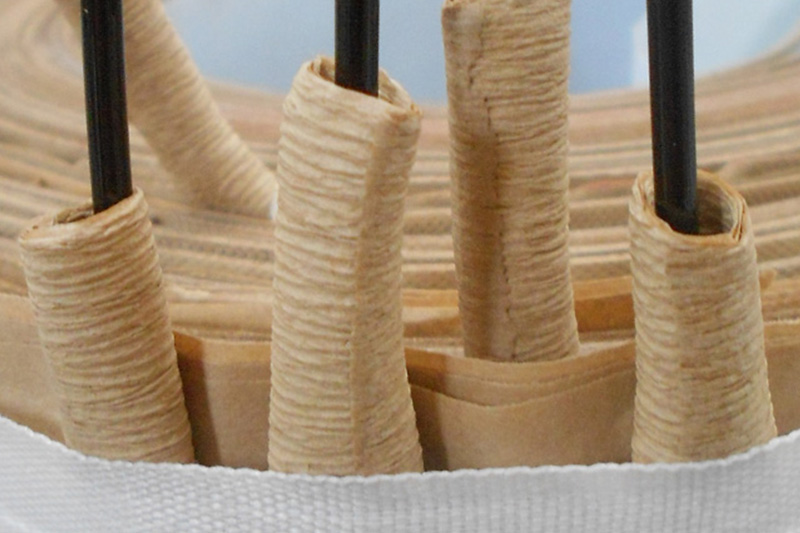
Oil-immersed transformers: Choose crepe paper with high oil absorption and high dielectric strength. Thermal class is B–F.
Dry-type transformers: Choose products with thermal class H or above. Focus on mechanical strength.
Small motors: Use Class E or B products, thickness 0.1–0.2 mm, and emphasize flexibility.
Large high-voltage motors: Use Class F or H products, requiring high dielectric strength and corona resistance.
Special motors (e.g., traction motors): Use insulation materials of Class H or above. And the materials must meet vibration and thermal shock resistance requirements.
Turn-to-turn insulation: Use thin crepe paper (0.05–0.1 mm) with good flexibility.
Main insulation: Use thicker materials (0.2–0.5 mm) with high dielectric strength.
Power generation and metallurgical equipment: Use Class C heat-resistant products. And some conditions may require mica composite reinforced materials.
New energy vehicle motors: Use Class F–H products that meet both oil resistance and thermal cycling requirements.
♦ Focusing only on price while ignoring the match between thermal class and equipment lifespan.
♦ Choosing excessively thick paper, which compromises winding compactness.
♦ Failing to verify compatibility with insulation oil or resin systems.
Avoiding these issues can reduce future maintenance costs and the likelihood of equipment failures.
Heat-resistant crepe paper must meet the following standards:
IEC 60371: Standard for heat resistance of insulating materials
UL 1441: Standard for electrical insulation systems
GB/T 5591.2: Chinese standard for electrical insulation materials
ISO 9001: Quality Management System Certification
The proper selection of heat-resistant crepe paper is an important prerequisite for ensuring the long-term stable operation of electrical equipment such as transformers and motors. In actual procurement and design, it is necessary to combine the heat resistance level, mechanical properties, electrical indicators, and specific application scenarios to select an insulation material with suitable performance and cost.
If you need our products please write down any questions, we will reply as soon as possible.
There are three ISO certificates for quality certification. The certificates will be shown later. ISO
After receiving the advance payment, the production cycle is 15-25 days. And the transportation cycle should be calcul……
We supply with installation guide and user manual for each transformer. If you do not understand them. We will offer v……
