As a crucial component in electrical insulation and mechanical structures, epoxy pulled rods are widely used in transformers, motors, and various electronic devices. Their performance directly affects the withstand voltage, insulation effect, and mechanical strength of the equipment. Therefore, a thorough understanding of the epoxy pulled rod manufacturing process is essential for product selection, quality control, and cost optimization. This article will provide a detailed explanation of the epoxy fiberglass pulling rod manufacturing process, main raw materials, and key quality control points to help engineers and purchasing personnel make more informed decisions.
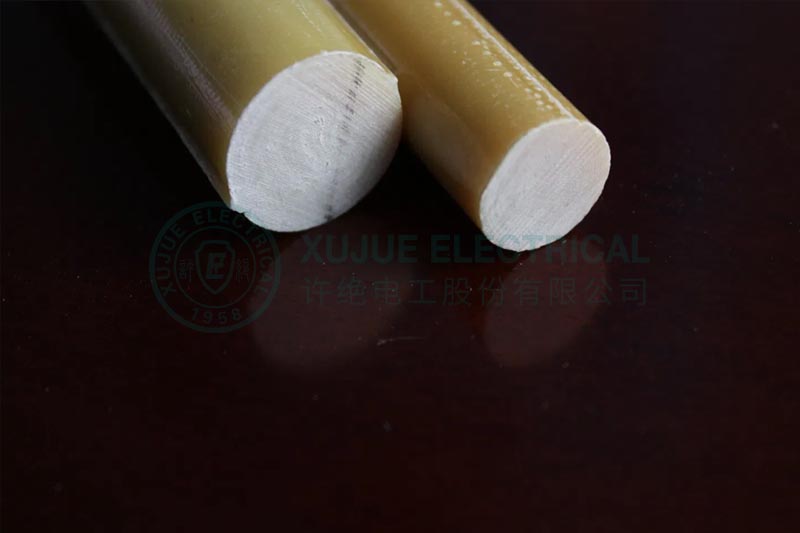
Epoxy fiberglass pulling rods are fiber-reinforced composite materials manufactured using a pull-forming process. They use alkali-free glass fiber as the reinforcing material and epoxy resin as the matrix material, processed through a continuous thermosetting molding process.
High mechanical strength
Good electrical insulation properties and corrosion resistance
Stable dimensional accuracy
They are commonly used in composite insulators, electrical equipment structural supports, high-voltage switchgear, and rail transportation, among other fields.
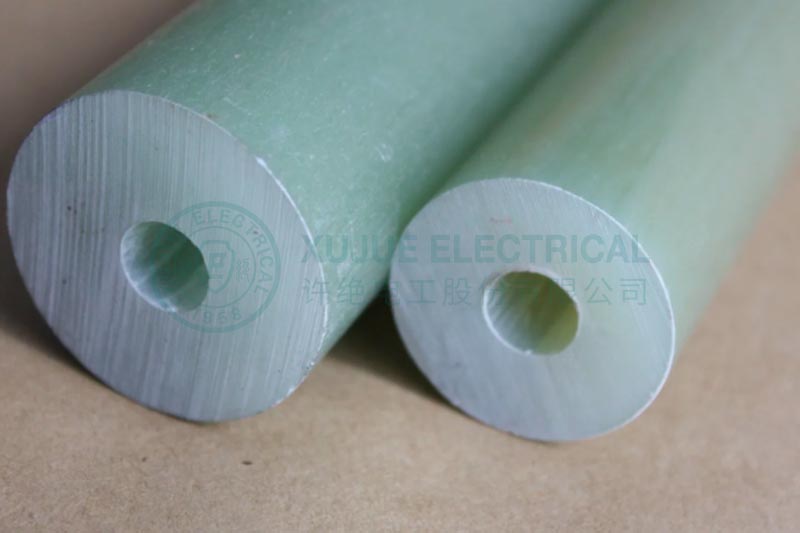
Epoxy Resin: Commonly used grades are E-51 or E-44. Its quality directly determines the heat resistance and mechanical strength of the final product.
Curing Agent and Additives: These are used to regulate the resin curing speed and improve the compressive strength and aging resistance of the product.
Fiberglass Cloth or Yarn: As reinforcing materials, they are used to improve the mechanical strength and impact resistance of the product.
The quality of raw materials directly affects the final performance of the epoxy drawn rod and must strictly comply with relevant national or IEC electrical insulation standards.
Pre-treated fiberglass yarn is guided into a resin impregnation tank containing epoxy resin solution prepared according to the specified ratio and maintained at a constant temperature.
The key to this step is thorough impregnation: Through the cooperation of the yarn guide and pressure rollers, it is ensured that each fiber is fully coated with resin and air bubbles are eliminated. This is an important prerequisite for ensuring product performance and quality.
After impregnation, the fiber bundles pass through multiple sets of molds to initially remove excess resin and bundle them into a preform close to the final product shape.
The preform enters a heated forming mold, typically using zoned heating control. During this process, the epoxy resin undergoes a cross-linking reaction, changing from a liquid to a solid state, thus fixing the product shape and size.
A continuous traction system pulls the impregnated fibers from the mold at a constant speed, maintaining production continuity. The traction speed must match the resin curing speed.
Surface Polishing: The product surface is polished to make it smooth and flat for easy subsequent installation.
Insulation Testing: Includes tests for withstand voltage, insulation resistance, and breakdown strength.
Mechanical Performance Testing: Includes tests for bending strength, tensile strength, and hardness.
Through rigorous testing, every batch of epoxy pull rods is certified to meet the requirements of IEC 60216 or relevant GB/T standards.
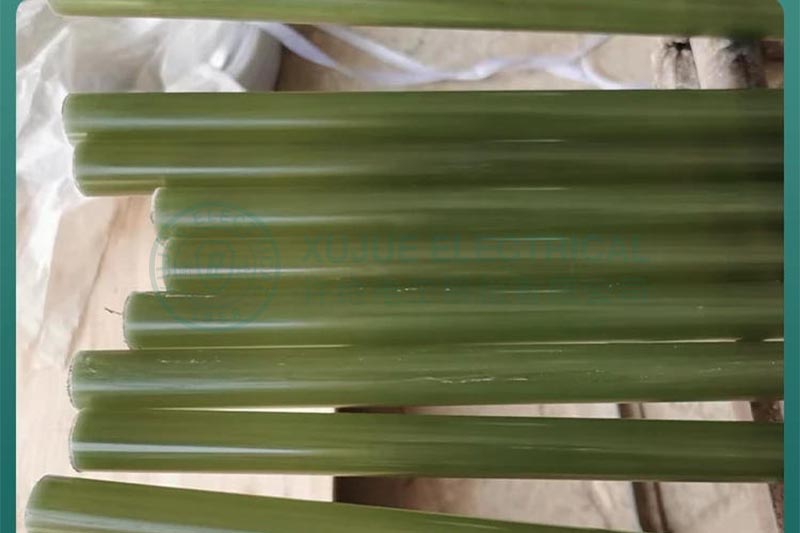
Raw Material Selection: High-quality epoxy resin and glass fiber are fundamental to ensuring product performance.
Impregnation Uniformity: Avoiding air bubbles and dry fibers ensures stable electrical insulation performance.
Dimensional Accuracy Control: Strictly controlling diameter and length tolerances to meet design requirements.
Curing Temperature and Time Control: The setting of curing temperature and time directly affects the product’s heat resistance and mechanical strength.
Finished Product Inspection: Dual verification of the product’s electrical and mechanical properties ensures long-term reliable operation.
Through strict control of the production process, epoxy pulled rods possess excellent insulation strength, mechanical properties, and long-term reliability. In modern power equipment and industrial manufacturing, epoxy pulled rods are crucial insulating components, and their quality directly affects the safe operation and service life of equipment.
If you require high-quality, high-temperature resistant epoxy pulled rods that meet international standards, we can provide customized services and quotations based on your specific requirements—including length, diameter, temperature resistance rating, and batch size.
If you need our products please write down any questions, we will reply as soon as possible.
There are three ISO certificates for quality certification. The certificates will be shown later. ISO
After receiving the advance payment, the production cycle is 15-25 days. And the transportation cycle should be calcul……
We supply with installation guide and user manual for each transformer. If you do not understand them. We will offer v……
