In industrial manufacturing, electrical and electronic engineering, and aerospace applications, material selection directly affects project performance. As a high-performance composite material, epoxy board has become a preferred choice in many applications due to its lightweight nature, high mechanical strength, and excellent electrical insulation. This article explains in detail the load-bearing capacity, physical properties, and application range of epoxy boards to provide a useful reference for material selection.
The load-bearing capacity of an epoxy board depends on its thickness, operating environment, and manufacturing process. High-quality epoxy boards typically support 500–2000 kg per square meter.
Please note that this is a reference value. Actual performance must be evaluated based on the specific application scenario.
The load-bearing strength of epoxy boards does not follow a fixed standard and is influenced by several factors:
Material Thickness: The thickness of the epoxy board is positively correlated with its load-bearing capacity. A thicker board can support more weight.
Operating Environment: High-temperature or humid environments can affect the performance of epoxy boards, leading to reduced load-bearing strength.
Manufacturing Process: A standardized, well-controlled manufacturing process ensures a uniform and stable internal structure, thereby enhancing load-bearing performance.
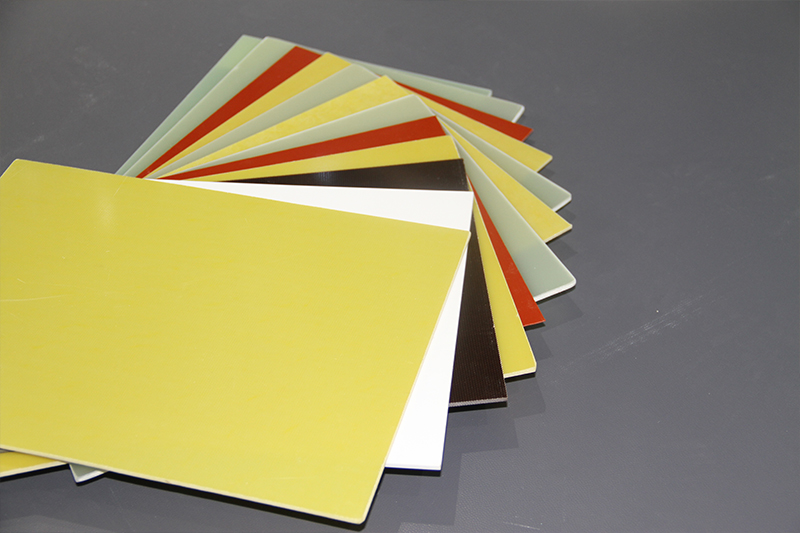
Epoxy boards are made of epoxy resin reinforced with materials such as glass fiber and carbon fiber. Their density is 1.8-2.0 g/cm³, significantly lower than that of metallic materials. This characteristic gives epoxy boards an advantage in applications with clear weight reduction requirements, such as automotive manufacturing and drone structures.
The lightweight nature reduces transportation costs and simplifies installation. In large equipment or high-frequency mobile applications, epoxy boards can reduce the overall load and improve equipment energy efficiency.
While maintaining lightweight properties, epoxy boards possess excellent mechanical strength.
Common epoxy board models such as FR4 and G10 have a flexural strength of 340–480 MPa. They can withstand continuous and repeated bending pressure in load-bearing structures without easily deforming or breaking.
Epoxy boards typically have a compressive strength of 300–400 MPa, exhibiting outstanding load-bearing capacity in vertical stress environments. They are suitable for applications such as mechanical gaskets, supports, and clamping structures.
Epoxy boards have a dense fiber structure and high impact resistance. They are not easily broken when subjected to sudden impacts or significant pressure.
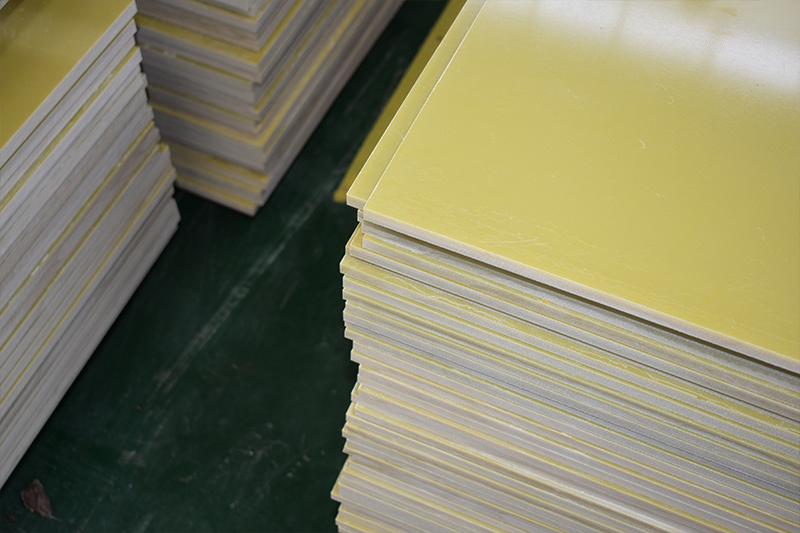
Epoxy boards possess excellent electrical insulation properties:
Voltage withstand strength up to 20–50 kV/mm
Stable dielectric constant
Excellent resistance to electric arc and leakage paths (e.g., FR4, G10 models)
Based on these properties, epoxy boards are widely used in high-voltage equipment, power equipment, motors, transformers, and charging equipment.
Transformer support structures
Switchgear partitions
Motor slot wedges
Insulation brackets, reactor support assemblies
CNC machining fixtures
Machinery gaskets
Tooling plates, base plates
High load-bearing support components
Energy storage equipment insulation supports
Electric vehicle battery pack fireproof and heat-insulating layers
Insulation structural components for inverters and electronic control systems
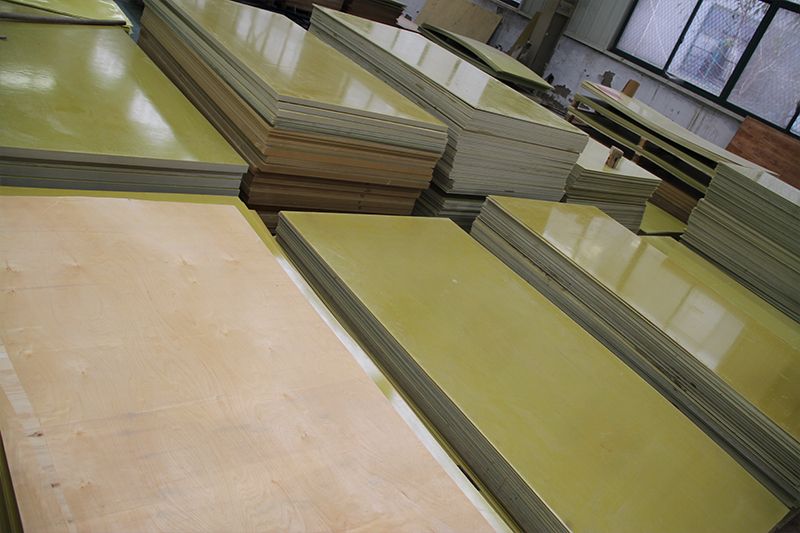
In engineering applications, epoxy boards suitable for load-bearing capacity can be selected based on the following dimensions:
♦ Material Grade: Epoxy boards such as FR4, G10, G11, and 3240 exhibit significant performance differences.
♦ Thickness: Epoxy board thickness is positively correlated with load-bearing capacity. Common specifications range from 0.5–50 mm.
♦ Processing Method: CNC precision machining ensures the stability of the epoxy board’s load-bearing structure.
♦ Temperature Resistance: For example, G11 epoxy boards can withstand temperatures up to 150°C.
Recommendation: G10/G11 grades are preferred for high-strength structural components. When balanced performance requirements are met and cost control is strict, FR4 is a commonly used choice.
Epoxy boards combine lightweight, high strength, and strong electrical insulation. They are composite materials that meet both load-bearing requirements and safety requirements. In fields such as power equipment, machinery industry, and new energy, epoxy boards provide reliable, stable, and cost-effective material solutions.
For customized needs, please contact us for further support.
If you need our products please write down any questions, we will reply as soon as possible.
There are three ISO certificates for quality certification. The certificates will be shown later. ISO
After receiving the advance payment, the production cycle is 15-25 days. And the transportation cycle should be calcul……
We supply with installation guide and user manual for each transformer. If you do not understand them. We will offer v……
