With the continuous development of industrial automation and power equipment, the performance and reliability of generators have become increasingly important. In generator manufacturing and maintenance, insulation materials are among the core components. G10 and FR4 epoxy sheets, known for their excellent mechanical strength, electrical insulation, and heat resistance, have become indispensable key materials inside generators. This article provides an in-depth analysis of the applications and selection points of G10 and FR4 epoxy sheets in generators.
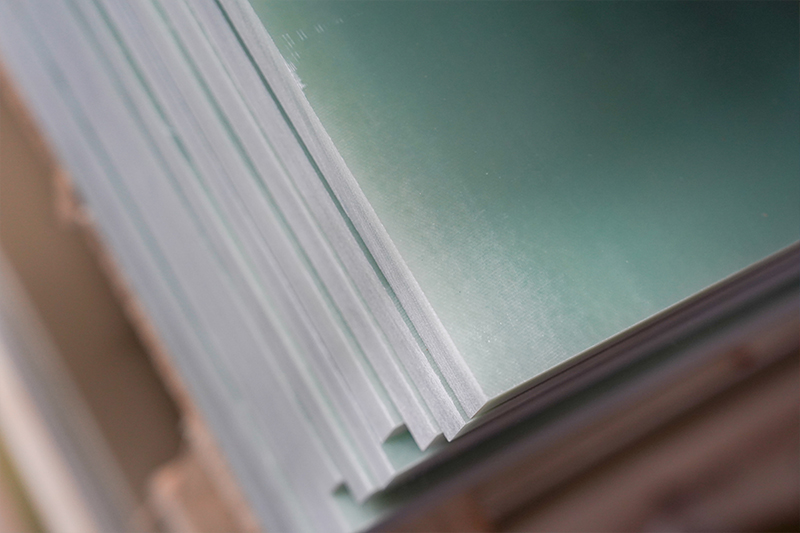
G10 is a composite material made by impregnating fiberglass cloth with epoxy resin, then laminating it under high temperature and high pressure. Its name originates from the NEMA (National Electrical Manufacturers Association) standard. G10 provides extremely high mechanical strength, excellent insulation performance, and good chemical resistance.
FR4 is a variant of G10, where “FR” stands for “Flame Retardant.” While maintaining the excellent properties of G10, FR4 adds flame-retardant capabilities and complies with the UL94 V-0 standard. It is widely used in electrical equipment requiring strict fire-safety performance.
Used to secure stator windings and prevent movement caused by electromagnetic forces
Provide electrical insulation between the windings and the iron core
Isolate windings of different phases to prevent phase-to-phase short circuits
Provide mechanical support for winding end turns, reducing vibration damage
Used for fixing and isolating winding end structures
Maintain safe spacing between windings
Support and insulate the generator’s wiring system
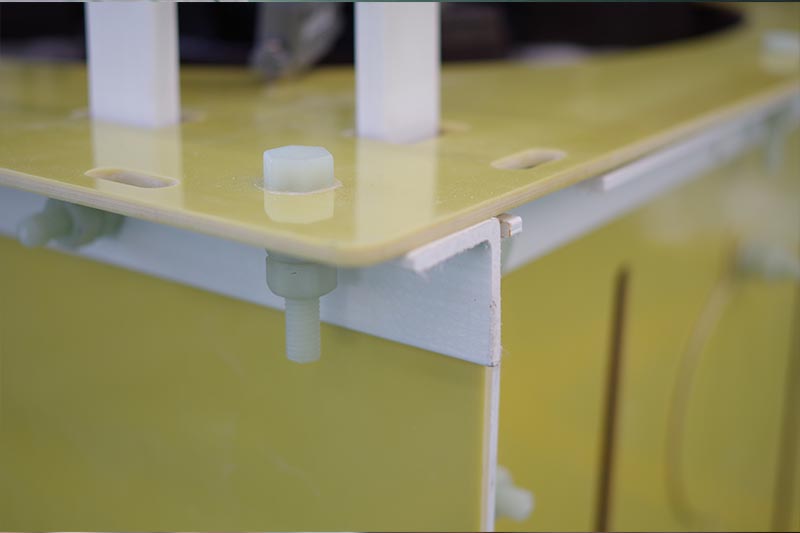
When selecting G10 or FR4 epoxy sheets, the following factors should be considered:
Operating voltage level: Ensure the dielectric strength of the material meets the generator’s rated voltage requirements.
Ambient temperature: For high-temperature environments, choose FR4 epoxy sheets with a higher thermal rating.
Mechanical strength: Rotor or stator support components must withstand mechanical stress caused by high-speed rotation. Therefore, select sheet thickness and density appropriate for the load.
Flame-retardant performance: If fire-safety standards must be met, FR4 flame-retardant material should be prioritized.
Machinability: The material should be easy to cut, drill, or shape to accommodate the generator’s complex internal structure.
♦ Standard industrial generators: FR4 is usually the safer choice due to its flame-retardant characteristics.
♦ High-temperature environments: Consider FR4 with a higher thermal rating or G11 material.
♦ High-voltage generators: Select special-grade epoxy sheets with higher dielectric strength.
♦ Cost-sensitive projects: G10 may be more economical as long as it meets safety standards.
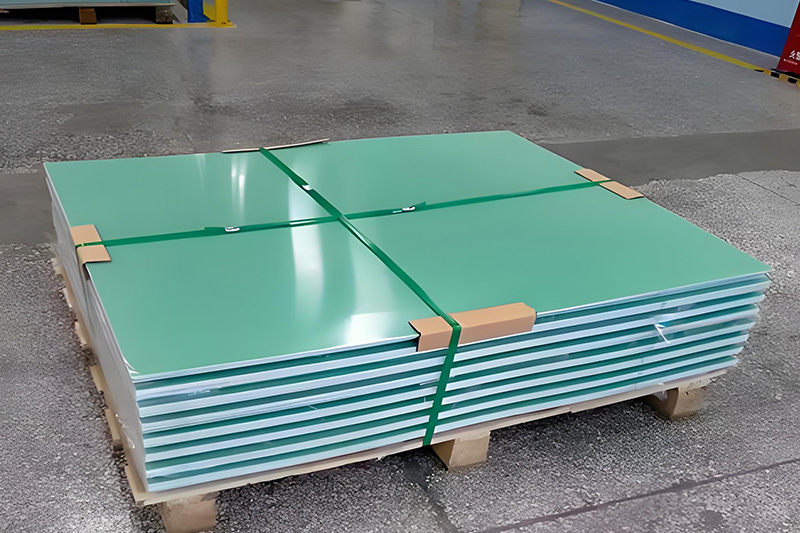
Mechanical machining: Hard-alloy cutting tools are recommended.
Drilling: Use a slower feed rate to avoid delamination and edge cracking.
Surface cleaning: After machining, clean the surface thoroughly to prevent debris from affecting insulation performance.
Ensure installation surfaces are clean, dry, and free of oil.
Avoid over-tightening fasteners to prevent cracking of the material.
Maintain proper electrical clearance and creepage distance.
Visual inspection: Check for cracks, discoloration, or signs of carbonization.
Insulation testing: Regularly measure insulation resistance to detect any decline.
Cleaning and maintenance: Remove dust and contaminants to keep surfaces clean.
Surface arcing marks:
Check if the electrical clearance is sufficient and whether the environment is excessively humid.
Material cracking:
Verify that mechanical stress is not excessive and that installation is correct.
Performance degradation:
Consider material aging or thermal degradation and replace the material promptly if needed.
G10 and FR4 epoxy sheets play a crucial role in generators. They not only ensure electrical insulation but also enhance mechanical stability and equipment safety. When selecting materials, it is important to consider the generator’s operating environment, load characteristics, and safety requirements to choose the appropriate sheet type and thickness. This can extend equipment lifespan and improve operational reliability.
If you need our products please write down any questions, we will reply as soon as possible.
There are three ISO certificates for quality certification. The certificates will be shown later. ISO
After receiving the advance payment, the production cycle is 15-25 days. And the transportation cycle should be calcul……
We supply with installation guide and user manual for each transformer. If you do not understand them. We will offer v……
